Wait, What Are Those Little Balls on Your Hairbrush For?
Dahvi Shira
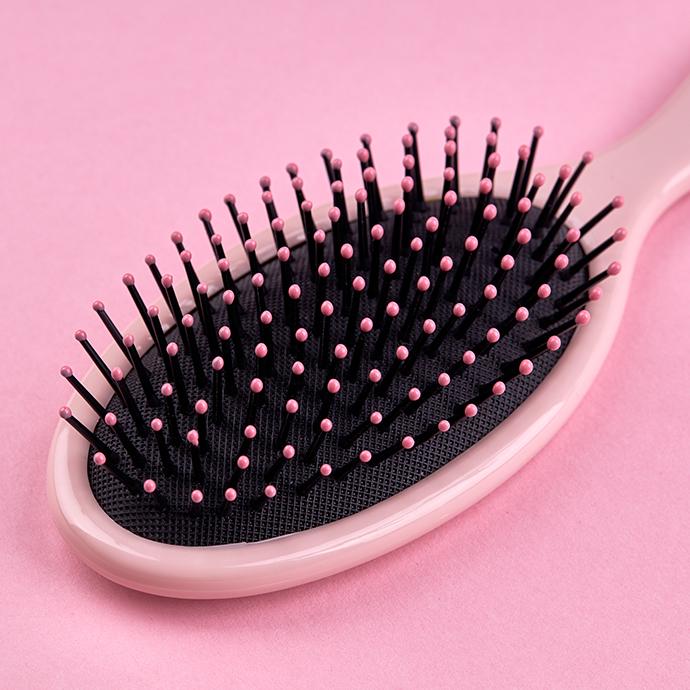
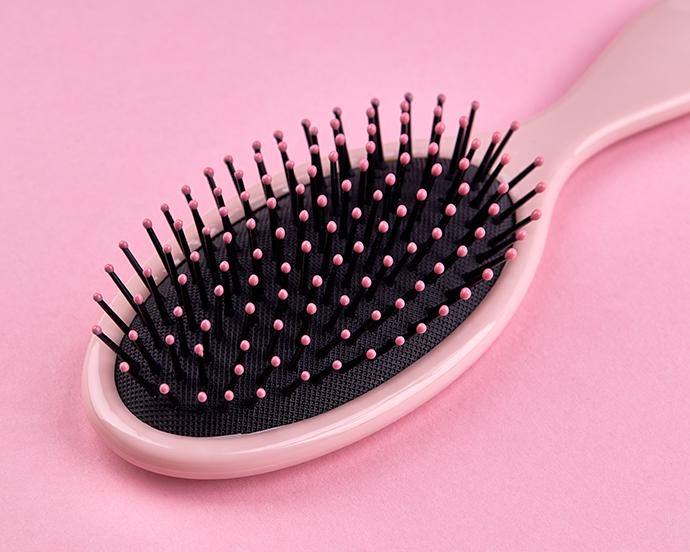
Photo by Andrii Atanov/Getty Images
Do you remember where you were when you first uncovered the jaw-dropping, $325 MASON PEARSON Popular Bristle & Nylon Hairbrush BN1? (They go up to $875 by the way.) We don’t know about you, but up to that point, we kind of figured brushes were just one-size-fits-all. I mean, sure, you had the cheapie, on-the-go GOODY brushes that you could slip into the tiniest bag, but other than that, a brush was a brush—or so we thought. Little did we know, there were wet brushes, dry brushes, detangling brushes, straightening brushes…you get the picture.
But once we started paying attention to beauty, we began diving deeper into brushes, even recognizing the difference in bristles. Like how there are natural and synthetic fiber options, but even more so, there are tapered bristle and ball-tipped bristle options too. Turns out, brushes are way more nuanced than we originally thought.
That said, we reached out to AWARE HAIR co-founder Tina Mui, and Los Angeles hair salon owner Marco Pelusi, to take us through the differences between the two types of bristles.
It's about glam time you treated yourself.
Join IPSY
MEET THE EXPERT
Tina Mui is a trichologist, expert stylist, and co-founder of AWARE Hair
Marco Pelusi is a celebrity hairstylist and colorist, and owner of Marco Pelusi Hair Studio in West Hollywood, CA.
What Are Ball-Tipped Hairbrush Bristles For?
When dealing with a sensitive scalp, ball-tipped bristles are the best bet.
“The ball tips are there to soften the point of contact with the scalp,” Mui explains. “They help make brushing gentler and less scratchy. They can also help the bristles glide through the hair more smoothly to reduce snagging or catching.”
Benefits don’t stop there for ball-tipped bristles, as Pelusi says they can help stimulate scalp circulation as well. But interestingly enough, “I’ve noticed that the balls on the bristles come loose or actually fall off,” he notes. “So you're left with a combination of tapered and ball bristles anyway.”
The AVEDA Wooden Paddle Brush is one of our favorite styling brushes, thanks to its extended ball bristles for easy detangling and stress reduction to the hair and scalp during blow-drying and styling to create smooth, straight styles.
What Are Tapered Hairbrush Bristles For?
When it comes to coarse, thick, or especially curly strands, tapered bristles could be a more fitting option.
“They help reduce resistance and spread pressure more evenly as you brush,” Mui shares. “That helps with detangling by not putting too much tension on the strands—which reduces tugging at the scalp.”
Pelusi calls tapered bristles more of a “one-size-fits-all” bristle, adding that “While they may not be as gentle on the hair, they can provide more control when styling. When I use a tapered bristle, I understand that I’m sacrificing the 'gentleness' of the ball bristle for a better styling effect with the tapered bristle.”
Pelusi’s professional hair care collection includes predominantly tapered bristles, thanks to their “Styling control and ability to get through the hair quicker and easier,” he explains. “It helps me achieve better styling results.”
For anyone new to tapered bristles, we personally love the new TANGLE TEEZER Complete Care Brush, thanks to its multifaceted ability to smooth, shine, massage, and detangle. It also offers different brushes for different hair types (straight to wavy, fine, and curly to coily).
Are Ball-Tipped or Tapered Bristles Easier to Clean?
Obviously, any time a personal care product is used, sanitary conditions are always a hot topic.
When it comes to ball versus tapered hairbrush bristles, “The material and how you clean the brush matter more than the shape of the bristles,” Mui explains. “Any brush can collect oil, dead skin, hair, and product buildup regardless of the bristle. It's important to remove trapped hair, wash it regularly, and let it dry completely. From a sanitation standpoint, smooth and nonporous materials are easier to clean thoroughly because they don’t absorb as much moisture.”
Which Hairbrush Bristles Are Better for Your Hair?
Ultimately, regardless of what bristles you fancy, “The quality of the bristle matters just as much as the shape,” Mui explains. “If the tips are rough, cracked, or poorly finished, they can catch on the hair and cause more pulling. So whatever brush you use, it should glide through the hair without scratching the scalp or snagging the hair.”
And with Pelusi’s notes about the balls falling off of bristles anyway, you could very well just end up with tapered bristles in the end.
Liked this post? Share!
Related Stories


Hair
Olivia Colman's New Hair Has a Secret
3 min read


Hair
Love It or Hate It, Crimped Hair Is Officially Making a Comeback
3 min read


Hair
The Tiny Hair Product We Suddenly Can’t Live Without
4 min read


Hair
Your Skin Tone Might Be the Secret to Your Best Hair Color Yet
4 min read


Hair
Zendaya Just Made the Pixie Cut the Haircut of the Moment
5 min read


Hair
No More Hiding, We're Gray Blending Now
6 min read


Hair
Your Blowout Brush Might Be Damaging Your Hair—Here’s How to Fix It
3 min read


Hair
The Best Makeup Colors for Redheads, According to an Expert
4 min read
Beauty Picked Just for You
Get 5 products worth up to $70
Exclusive access to epic deals up to 80% off
Starting at just $15/month. Cancel anytime.