The SPF Sandwich Is Trending—Here’s How to Layer Sunscreen Like a Pro
Maddie Aberman
You double cleanse. You apply serums. You moisturize like your skin’s life depends on it. But when it comes time for sunscreen (the literal line of defense between your glow and the sun’s not-so-cute effects), are you layering it the right way?
If you’ve ever slapped on SPF after a full routine only to notice it pilling, sliding, or just not playing well with your makeup, we’re here to help you fix that. Enter: the SPF sandwich—aka layering sunscreen under and over your makeup so it actually works all day long. But like any good sandwich, it’s all about the ingredients and the order.
To break it all down, we tapped board-certified dermatologist Ellen Marmur, MD, to share her best tips on how (and where, and when) to apply SPF like a pro. From sunscreen layering mistakes to the best makeup-friendly textures, here’s everything you need to know to give your skin the protection it deserves.
It's about glam time you treated yourself.
Join IPSY
MEET THE EXPERT
Ellen Marmur, MD, is a board-certified dermatologist and founder of MMSkincare.
Why Sunscreen Layering Matters
Sunscreen doesn’t just work, it works when you apply it correctly. Think of SPF as a physical or chemical barrier between your skin and UV rays. But when it’s layered improperly—like over thick oils or under heavy makeup—it can lose its power to protect.
Plus, not all SPF is created equal. “Most people under-apply sunscreen or think one coat in the morning is enough,” says Dr. Marmur. “If you're out in the sun, sweating, or wearing makeup, it needs to be reapplied every couple of hours.”
And sorry, but that SPF in your foundation isn’t cutting it. “Makeup that contains SPF can be a great boost, but it shouldn’t be your only line of defense,” she says.
Where Sunscreen Fits in Your Skincare Routine
Let’s settle the moisturizer-or-sunscreen-first debate once and for all: Sunscreen goes last. Always.
“Think of it as your skin’s shield,” says Dr. Marmur. “Moisturizer helps hydrate and prep your skin, and then sunscreen seals everything in and protects you from UV damage.” Here’s your go-to order:
Cleanser
Toner (if you use one)
Serums
Moisturizer
Sunscreen
Makeup (if you wear it)
Pro tip: Wait about a minute between moisturizer and SPF to let everything settle and reduce the risk of pilling.
How to Layer Sunscreen Correctly
Let’s break it down into exactly what to do.
1. Start With the Right Formula
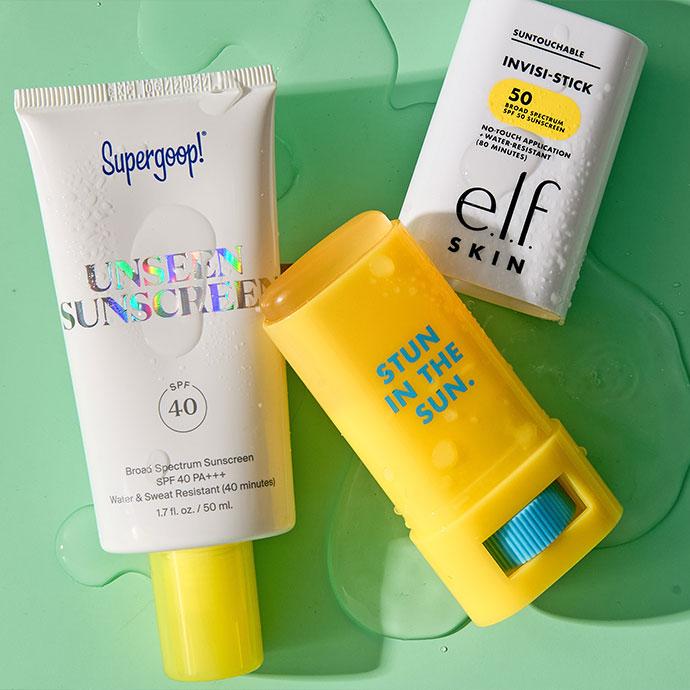
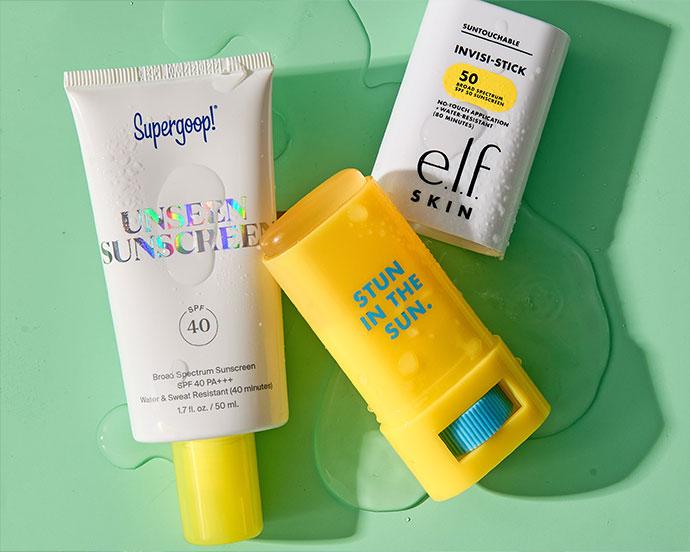
Heavy SPF formulas and full-glam makeup don’t always mix. “Look for lightweight, fast-absorbing sunscreens,” says Dr. Marmur. “Anything too greasy can make your makeup slide.” We love the SUPERGOOP! Unseen Sunscreen SPF 40, a cult favorite for its invisible, primer-like finish. A newer addition to our lineup? E.L.F. SKIN Invisi-Stick SPF 50. It’s portable and mess-free with a smooth, matte application.
2. Apply Generously
“A nickel-sized amount for your face alone,” says Dr. Marmur. “More if you're including your neck.” Don’t skimp!
3. Let It Set
Give it a beat—like a minute or two—before applying foundation. Rushing can cause products to mix and break down your SPF’s effectiveness.
4. Layer With Makeup Thoughtfully
Use lightweight, non-greasy makeup and apply with gentle tapping motions (especially with brushes or sponges) so you don’t disturb your SPF.
5. Reapply Without Ruining Your Look
Enter the SPF sandwich: layer once before makeup, and again on top. Spray or powder formulas make this easy. Dr. Marmur is a fan of spray sunscreens, but make sure they’re made for the face and don’t use propellants like butane, she says. “Powder sunscreens are great for touch-ups, especially on oily skin or if you're wearing makeup, but they shouldn't be your main source of protection. They are great for scalp areas where you do not want any greasiness on the hair.”
What Not to Layer Over (or Under) Sunscreen
You know what they say: less is more—especially when it comes to what goes on top of your SPF. “Anything heavy or oily can break it down,” says Dr. Marmur. “Think facial oils, greasy primers, or thick balms. They can cause the sunscreen to slide or separate.”
Also important: don’t mix your SPF with other products. That viral skincare cocktailing trend? It doesn’t apply to your SPF. Mixing sunscreen with foundation or moisturizer can dilute its protection.
FAQs About Sunscreen Layering
Can I layer chemical and mineral sunscreens?
Yes—but it’s not really necessary. “The distinction between chemical and mineral sunscreen is largely a false dichotomy,” says Dr. Marmur. “Most sunscreens are blends of both to offer the best UVA + UVB protection.”
Do I need to reapply if I’m indoors?
If you're sitting near windows or getting sun exposure from screens or indirect light, reapplication is still helpful, especially midday.
How often should I reapply sunscreen?
Every two hours, especially if you’re outdoors, sweating, or wearing makeup. Touch-up with a mist or powder to keep your SPF sandwich going strong.
Is SPF in moisturizer or makeup enough?
Short answer: no. Makeup with SPF is great as a bonus, but not enough on its own, says Dr. Marmur.
Final Takeaway: Your Sunscreen Layering Routine, Simplified
If you remember nothing else, let it be this: moisturizer, then sunscreen, then makeup. Apply generously, reapply often, and avoid heavy products that mess with your glow.
Liked this post? Share!
Related Stories


Skin
Your Thanksgiving Feast Just Got a Skin-Loving Glow-Up
7 min read


Skin
Is Yellow Light Therapy the Next Big Thing in Skincare?
5 min read


Skin
Sculptra Curious? Here’s Everything You Need to Know Before Trying It
6 min read


Skin
Your Hands Are Getting a Skincare Routine Now
4 min read


Skin
Wait, Why Are Sliced Eye Patches Suddenly Everywhere?
3 min read


Skin
What Is Collagen Banking—and Does It Actually Work?
6 min read


Skin
What Do Beauty Certifications Actually Mean? Experts Break It Down
6 min read


Skin
What Is Spironolactone? Everything to Know About Taking It for Acne
4 min read
Beauty Picked Just for You
Get 5 products worth up to $70
Exclusive access to epic deals up to 80% off
Starting at just $15/month. Cancel anytime.